1. **How does Mark Twain develop the story's structure throughout the story?**
Answer:
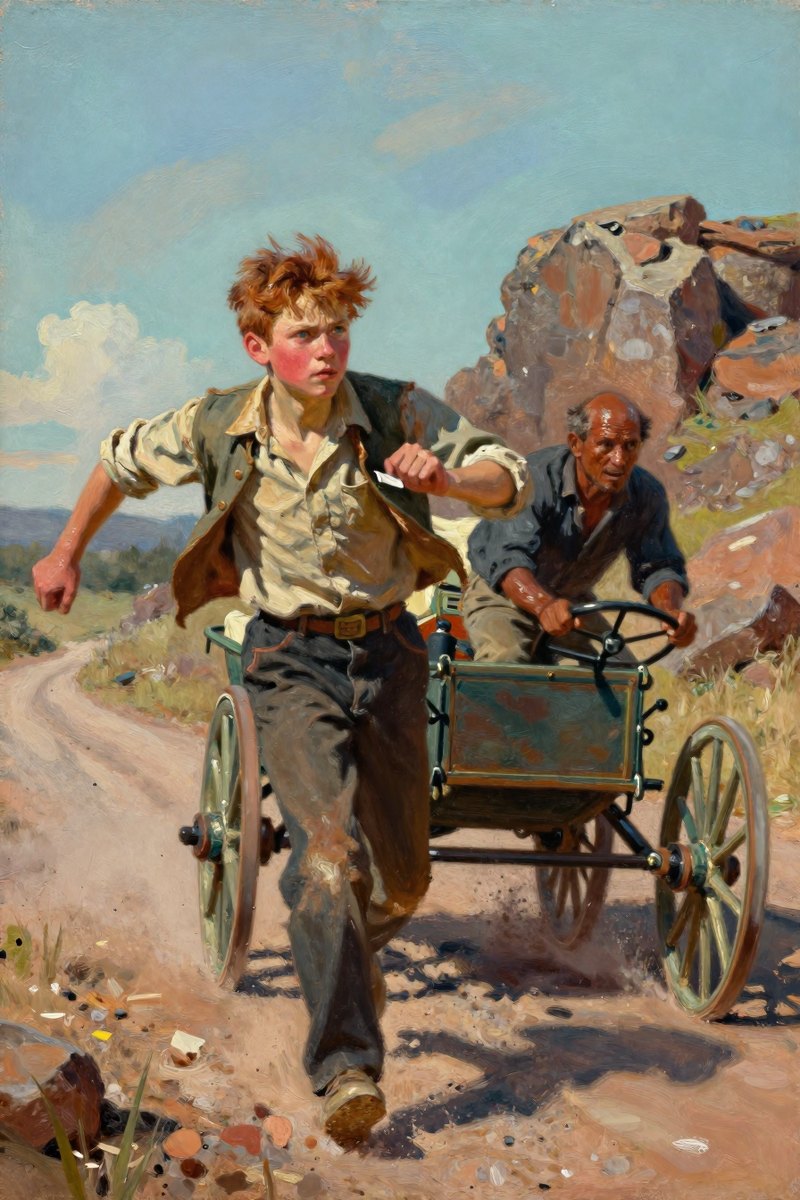
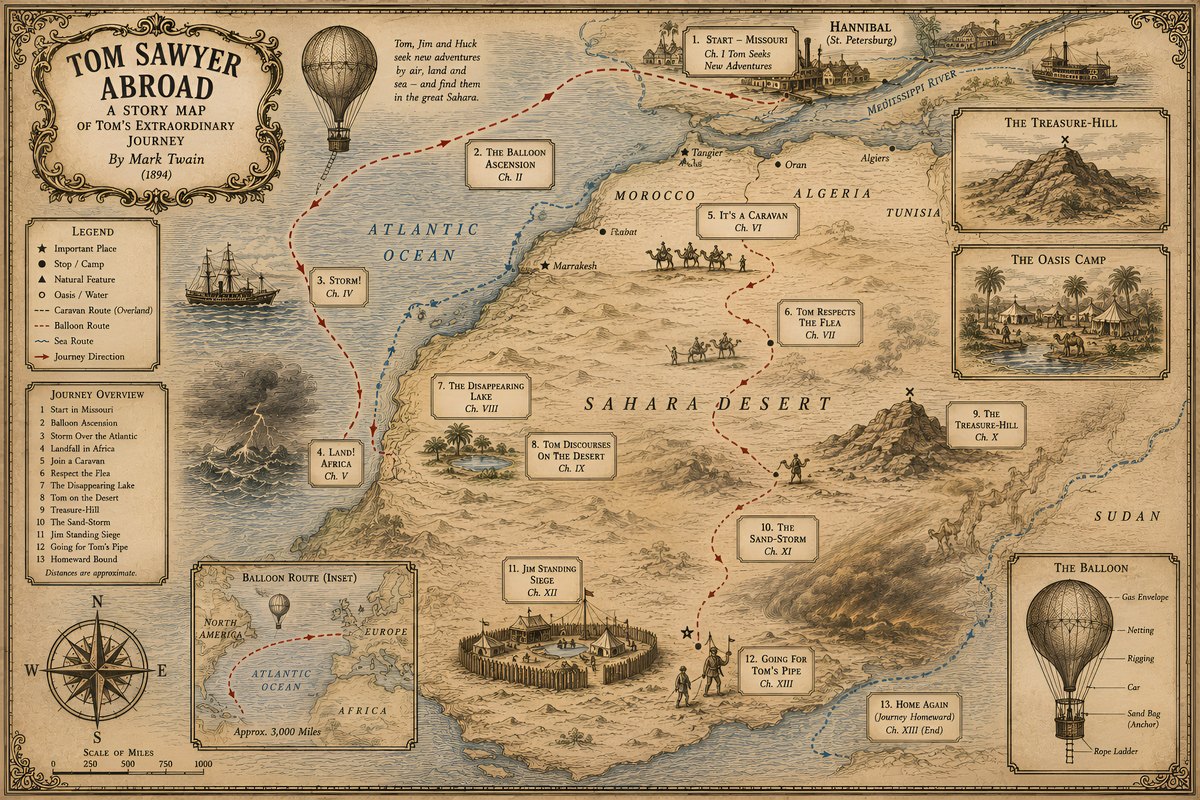
Twain structures the narrative as a chronological travel picaresque that begins with a domestic rivalry in Missouri over who is the village's greatest traveler. The structure then shifts rapidly into an episodic survival adventure once the boys are trapped on an accidental transatlantic balloon voyage that takes them across the ocean and into the Great Sahara Desert.
2. **In what way does the narrative point of view shape the reader's experience of the book?**
Answer:
The story is told from Huck Finn's literal-minded, first-person perspective, which grounds the highly unusual journey in practical, common-sense observations. This point of view allows the reader to experience the humor of the journey through Huck's naive lens, especially when he evaluates Tom’s grandiose, book-learned ideas against his own simple logic.
3. **How does Mark Twain develop the author's use of humor throughout the story?**
Answer:
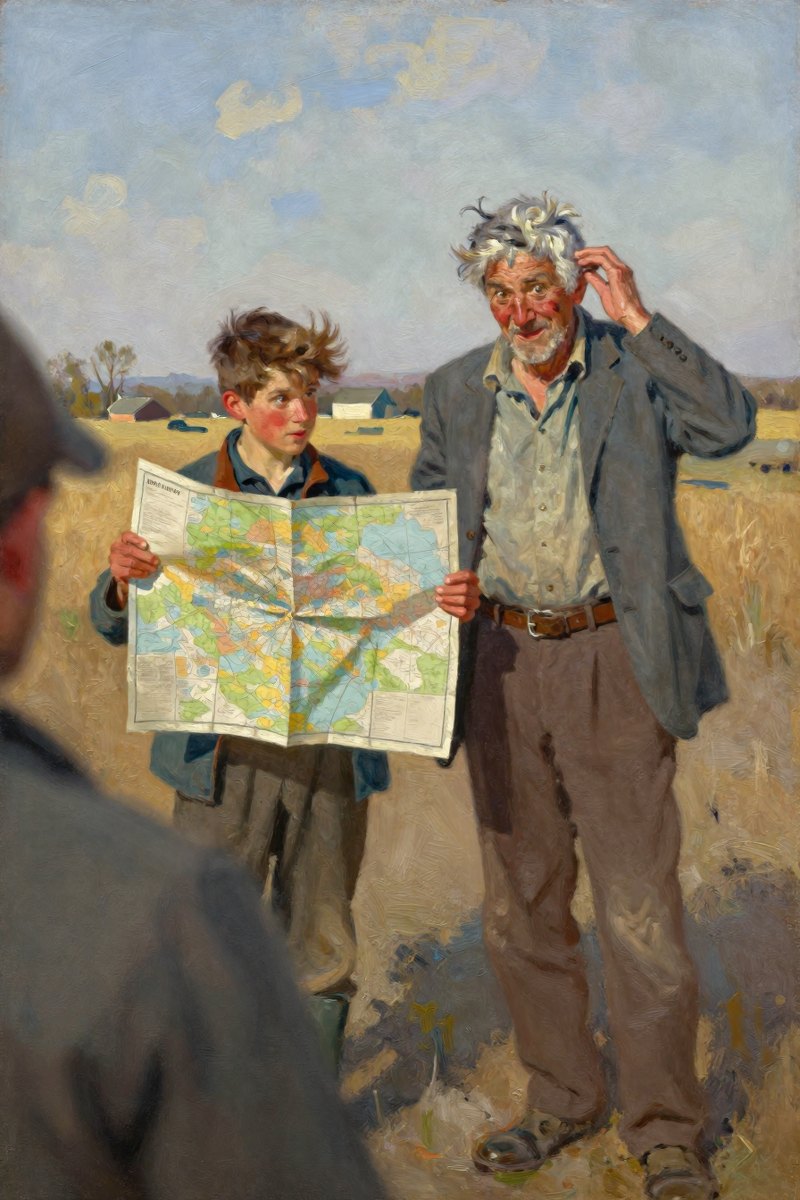
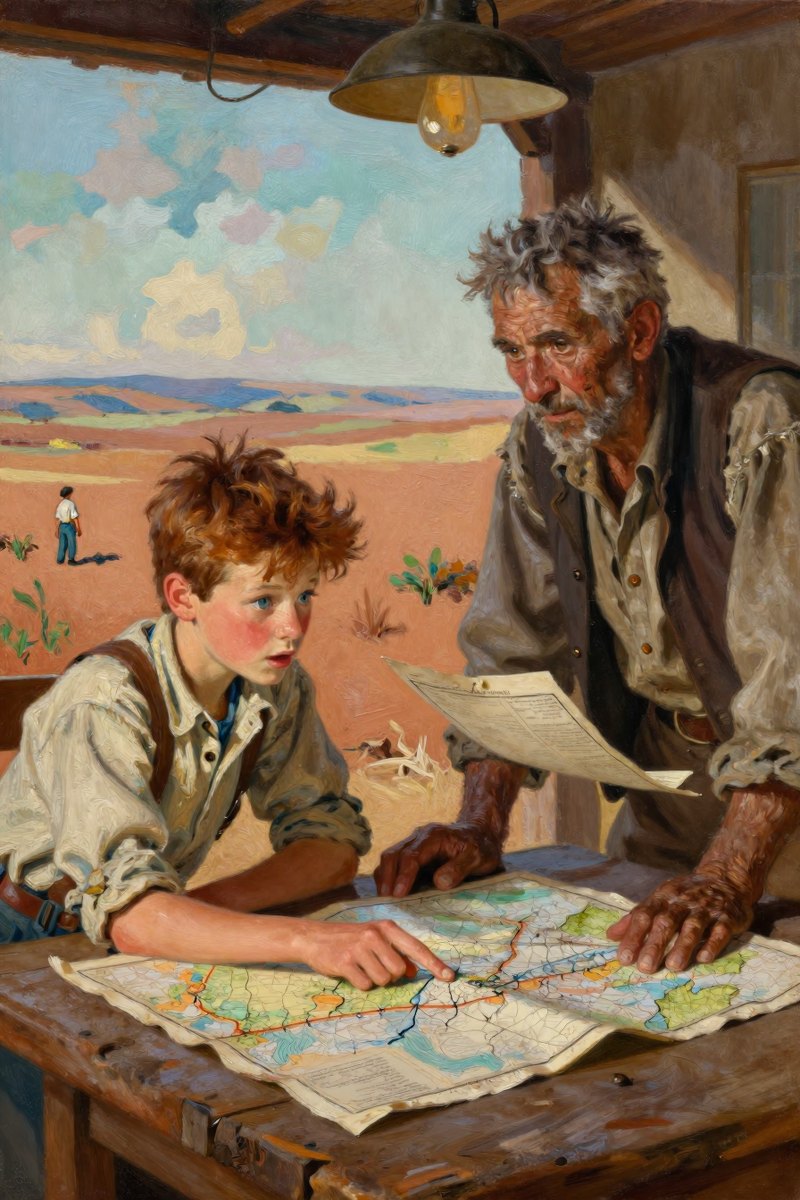
Twain develops humor primarily through the absurd, literal-minded debates among the three travelers, such as Huck arguing that Indiana must be pink because of its color on a map. Additionally, comical situations arise from Jim and Huck using everyday logic to completely dismantle Tom's romanticized concepts of "theology," "crusades," and "metaphors".
4. **What questions does the dialogue between key characters raise for you as a reader?**
Answer:
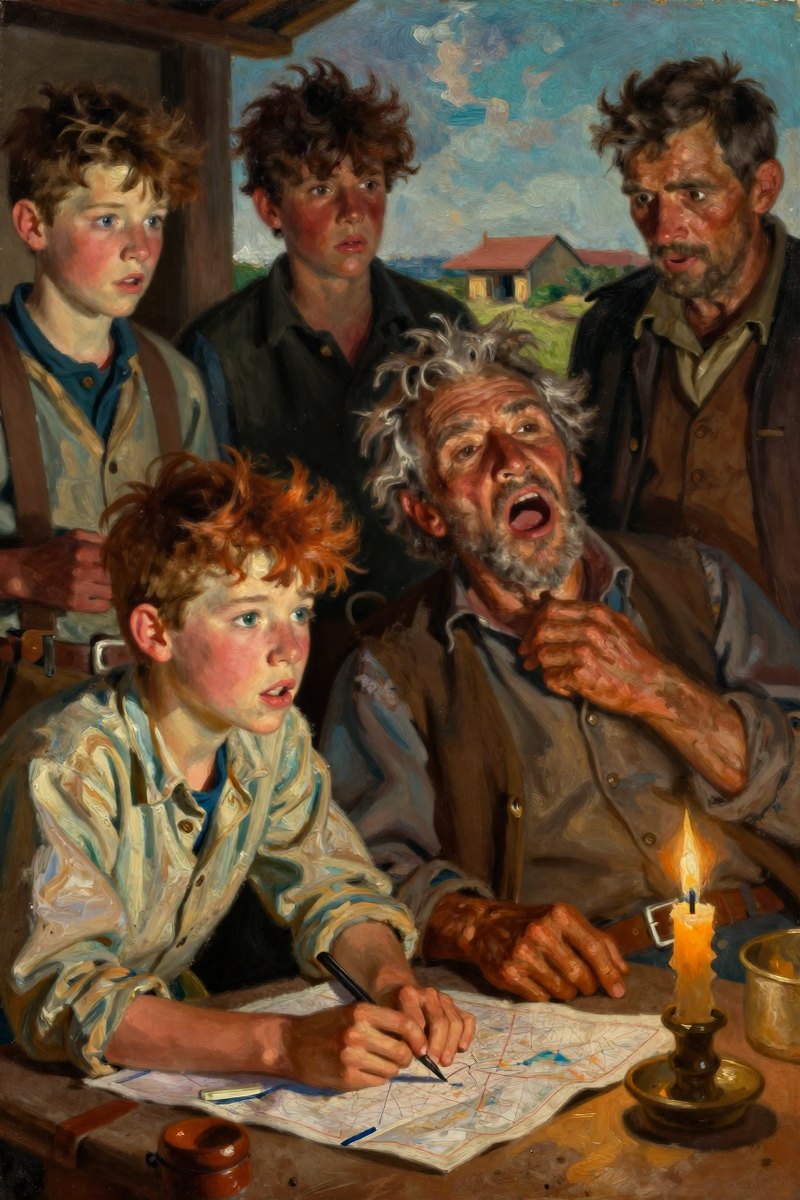
The characters' constant debates raise questions about whether formal education is actually superior to natural, lived common sense, as Huck and Jim frequently outmaneuver Tom's academic arguments. The dialogue also makes the reader wonder how these three highly stubborn individuals will manage to cooperate well enough to survive the life-or-death situations they face.
5. **What questions does the resolution raise for you as a reader?**
Answer:
Because the provided portion of the story leaves the characters still traveling across the vast Sahara Desert, it raises immediate questions about how they will eventually manage to return safely to Missouri. Furthermore, the final chapter title "GOING FOR TOM'S PIPE" makes the reader wonder what ridiculous or dangerous stunt Tom will pull next, and whether his desire for glory will ultimately get them killed.
6. **Why is the resolution important to understanding "Tom Sawyer Abroad"?**
Answer:
The resolution is crucial because it determines whether Tom's reckless pursuit of "glory" and "reputation" will be vindicated or humbled by his experiences abroad. It also serves as the final test of the boys' friendship, revealing whether their shared trials in the balloon have ultimately brought them closer together or driven them apart.
7. **What can you say about the central conflict in "Tom Sawyer Abroad"?**
Answer:
The central conflict of the story is character-driven, pitting Tom's reckless, romanticized desire for fame and adventure against Huck and Jim’s practical desire for safety and comfort. This internal group dynamic is constantly mirrored by external conflicts, such as their struggle to survive the whims of a mad professor, fierce desert storms, and wild beasts.
8. **In what way does the relationships between characters shape the reader's experience of the book?**
Answer:
The relationships provide a warm, familiar emotional anchor that contrasts with the bizarre and dangerous foreign landscapes the boys navigate. Even though they bicker constantly over trivia, their underlying loyalty and affection shine through during moments of crisis, such as when Jim and Huck rejoice over Tom surviving the professor's attack.
9. **What can you say about a minor character's contribution in "Tom Sawyer Abroad"?**
Answer:
The postmaster, Nat Parsons, acts as the catalyst for the entire plot by continuously bragging about his own historic trip to Washington, D.C.. His relentless boasting threatens Tom's status as the village hero, directly motivating Tom to seek out the balloon ascension in St. Louis so he can reclaim his reputation as the ultimate traveler.
10. **How does Mark Twain develop the author's use of foreshadowing throughout the story?**
Answer:
Twain uses early warnings from Huck and Jim regarding the professor’s "crazy" behavior to foreshadow the violent breakdown that occurs during the storm. Similarly, the presence of unusual items in the balloon, like brass beads and jewelry, foreshadows that the travelers will land in a completely foreign, uncivilized territory rather than England.
11. **What questions does the story's title raise for you as a reader?**
Answer:
The title, "Tom Sawyer Abroad," immediately makes the reader wonder how a provincial, small-town American boy will handle the vastly different cultures and environments of the wider world. It also raises the question of whether Tom's book-learned, romantic notions of foreign lands will survive when confronted with the gritty reality of actual international travel.
12. **What questions does the central conflict raise for you as a reader?**
Answer:
The conflict raises questions about the true cost of pursuing fame, especially when Tom's selfish desire to be "celebrated" repeatedly puts Huck and Jim in mortal danger. It also leaves the reader questioning whether simple common sense is a far more valuable tool for survival than romanticized academic knowledge.
PER-CHAPTER STUDY QUESTIONS
## Chapter 1: CHAPTER I.
### Q1. How does the historical context of the story compare to what happened in earlier chapters?
**A1.** At the start of this book, the boys are back in St. Petersburg, Missouri, living in the quiet aftermath of their famous treasure hunt from *The Adventures of Tom Sawyer*. Unlike their previous local escapades, the historical context shifts toward a post-Civil War American fascination with modernization and world travel, represented by the town postmaster Nat Parsons boasting about his trip to Washington, D.C., which drives Tom mad with jealousy.
### Q2. How does the protagonist's internal struggles compare to what happened in earlier chapters?
**A2.** In earlier novels, Tom struggled with local, small-town moral dilemmas (like Aunt Polly’s rules or helping Muff Potter). Now, his internal struggle is a desperate crisis of ego; he cannot stand being overshadowed by Nat Parsons' travel prestige, driving him to concoct increasingly grand, ridiculous schemes—first a religious "Crusade" to the Holy Land, and then a trip to see the high-tech scientific balloon in St. Louis.
### Q3. What questions does an important object or symbol raise for you as a reader of this chapter?
**A3.** The **"patent" steam balloon** introduced at the end of the chapter symbolises both human ingenuity and reckless ambition. It raises the question: Will this highly advanced, unstable machine serve as Tom’s ultimate vehicle to glory, or will his lack of real-world knowledge make it a flying trap?
### Q4. What questions does the central conflict raise for you as a reader of this chapter?
**A4.** The central conflict is Tom's relentless desire for "reputation" versus Huck and Jim’s grounded desire for peace. It raises the question of how far Tom is willing to drag his friends into genuine danger just to satisfy his vanity and outdo a local postmaster.
### Q5. What do you notice about any conflict resolved in this chapter in "CHAPTER I."?
**A5.** The conflict of Tom's social irrelevance in the village is temporarily "resolved" when he successfully diverts Huck and Jim’s attention away from Nat Parsons' stories and convinces them to travel to St. Louis. It shows Tom's mastery of manipulation, though it sets up a much larger, more dangerous conflict.
## Chapter 2: CHAPTER II.
### Q1. What questions does the mood of this chapter raise for you as a reader of this chapter?
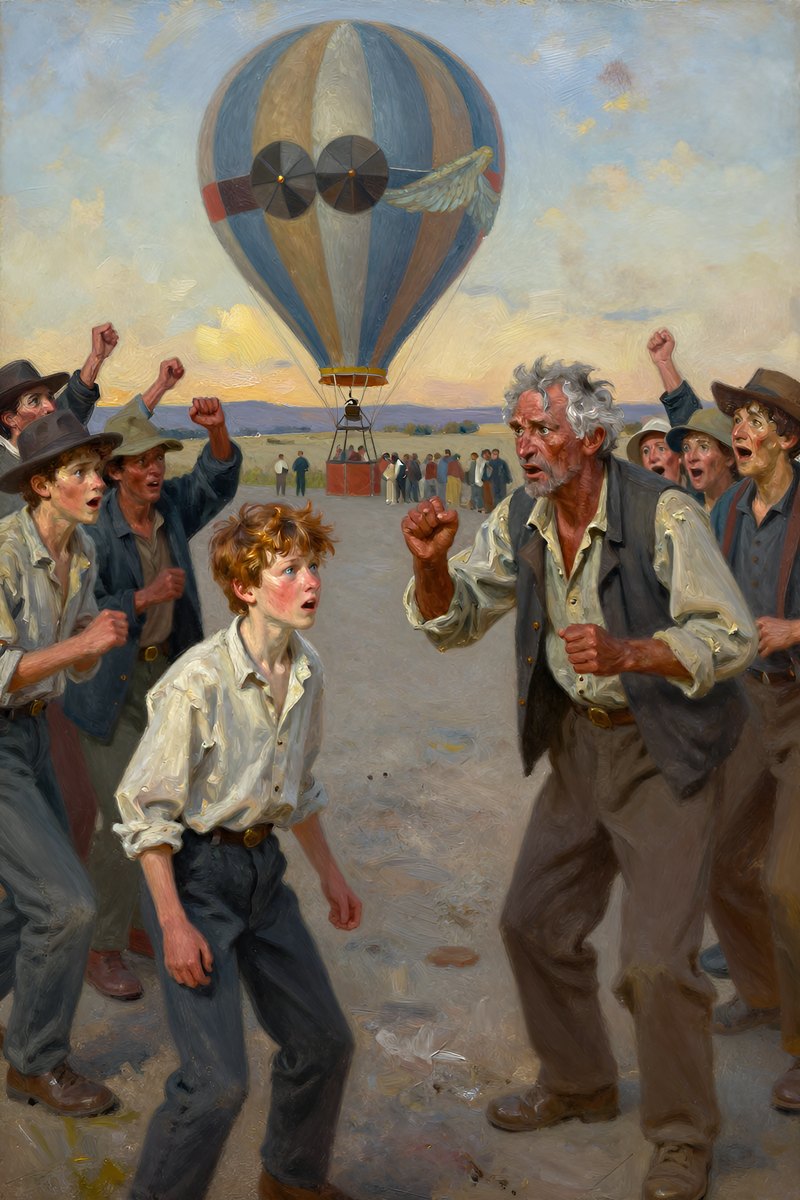
**A1.** The mood shifts abruptly from lighthearted curiosity to suspenseful dread when the brilliant but clearly unhinged Professor locks the boys inside the balloon and takes off. This raises the question: Is the Professor merely eccentric, or are the boys trapped thousands of feet in the air with a literal madman?
### Q2. What questions does the external obstacles the characters face raise for you as a reader of this chapter?
**A2.** The primary external obstacle is the fast-flying, uncontrollable balloon itself and its erratic pilot. This raises the terrifying question of survival: How can three children, who have never left the ground, hope to navigate or land a highly complex flying machine once they lose control of the situation?
### Q3. What can you say about the author's use of foreshadowing in this chapter?
**A3.** Twain heavily foreshadows the Professor's complete mental breakdown. The Professor's wild eyes, his manic boasting about his genius, and his sudden violent outbursts when the crowd doubts him all foreshadow that he will soon become a direct threat to the boys' lives.
### Q4. How does Mark Twain handle the dialogue between key characters here?
**A4.** Twain uses sharp, comedic dialogue to contrast the boys' terror with their usual bickering. Even as they are being kidnapped high into the clouds, Huck and Tom still argue over minor details and use their classic Missouri vernacular, keeping the tone characteristically humorous despite the high stakes.
### Q5. Why might the symbolism in the story matter to the chapter as a whole?
**A5.** The balloon symbolises a runaway scientific progress that humanity isn't quite ready to control. The brilliant inventor has gone mad with his own creation, mirroring the boys' helplessness as they are carried away by forces far larger than their small-town minds can comprehend.
## Chapter 3: CHAPTER III.
### Q1. What can you say about any conflict resolved in this chapter in this chapter?
**A1.** The immediate conflict of the boys' initial panic is resolved when they realize they must cooperate with the Professor to stay alive. By agreeing to help run the balloon and keep watch, they establish a tense, temporary truce with their captor.
### Q2. How does any conflict resolved in this chapter compare to what happened in earlier chapters?
**A2.** Unlike the minor squabbles in Chapter 1 or the helpless terror of Chapter 2, this resolution is born of sheer survival instinct. The boys are forced to grow up instantly, trading their childish arguments for practical, dangerous aeronautical duties.
### Q3. What questions does the antagonist's role raise for you as a reader of this chapter?
**A3.** The Professor’s behavior—drinking heavily and alternating between scientific lectures and violent delusions—raises the question: What is his ultimate destination? Does he intend to fly them to a specific place, or is he on a suicidal flight into the empty ocean?
### Q4. Why might the tone of the narrative matter to the chapter as a whole?
**A4.** The tone balances eerie claustrophobia with dark humor. Because Huck narrates, the terrifying reality of flying through a midnight storm is filtered through his simple, literal worldview, making the perilous journey feel oddly cozy yet deeply unpredictable.
### Q5. What questions does the narrative point of view raise for you as a reader of this chapter?
**A5.** Huck’s first-person narration raises questions of reliability regarding the technical aspects of the flight. Because Huck doesn't understand geography or science, we are forced to piece together where they actually are (heading east over the Atlantic) based on Tom's frantic interpretations of the Professor's maps.
## Chapter 4: CHAPTER IV.
### Q1. What can you say about the antagonist's role in this chapter?
**A1.** The Professor reaches the peak of his madness, culminating in a violent struggle where he attempts to throw Tom overboard. His role ends abruptly and tragically when, during the scuffle, he falls out of the car and plunges into the Atlantic Ocean below.
### Q2. What can you say about the use of imagery in this chapter?
**A2.** Twain uses stark, terrifying imagery to depict the vast, indifferent ocean. The contrast between the tiny, fragile balloon car and the infinite, dark Atlantic below highlights the boys' absolute isolation and the grim reality of the Professor's death.
### Q3. Why might any conflict resolved in this chapter matter to the chapter as a whole?
**A3.** The conflict with the mad Professor is permanently resolved by his death. This matters because it shifts the entire dynamic of the novel; the boys are no longer prisoners, but they are now completely on their own, forced to pilot a massive balloon across an ocean they don't understand.
### Q4. How does the pacing of the narrative compare to what happened in earlier chapters?
**A4.** The pacing accelerates dramatically. After chapters of slow-burning tension and debates, the violent confrontation, the Professor's fall, and the sudden realization that they are flying solo happen in rapid, breathless succession.
### Q5. How does how this chapter connects to the chapter before it compare to what happened in earlier chapters?
**A5.** While previous chapters built up the looming threat of the Professor's instability, this chapter serves as the explosive payoff. It transitions the story from a kidnapping escape-thriller into an epic, self-directed survival voyage.
## Chapter 5: CHAPTER V.
### Q1. Why might the main characters matter to the chapter as a whole?
**A1.** With the Professor gone, the three main characters—Tom, Huck, and Jim—must carry the narrative entirely on their own. Their distinct personalities drive the plot: Tom takes on the role of the arrogant captain, Huck remains the practical realist, and Jim acts as the emotional heart of the group.
### Q2. How does an important object or symbol compare to what happened in earlier chapters?
**A2.** The **balloon's controls** (the guide-ropes, the gas valves, and the steering wheel) shift from being symbols of the Professor's terrifying power to symbols of the boys' newfound freedom. Under Tom’s self-taught navigation, the machine becomes their home and their only hope.
### Q3. What questions does the pacing of the narrative raise for you as a reader of this chapter?
**A3.** The pacing slows down as the boys settle into a routine of flying over the endless ocean. This calmer pace raises a major question: Now that they have survived the storm and the madman, how will their limited supplies and total lack of sailing experience impact their journey?
### Q4. How does a surprising moment in this chapter compare to what happened in earlier chapters?
**A4.** The most surprising moment is the sudden sighting of land, which Tom calculates to be Africa rather than England. Unlike earlier surprises (which were terrifying and violent), this is a moment of awe and wonder, expanding the scale of their adventure to a global level.
### Q5. How does the external obstacles the characters face compare to what happened in earlier chapters?
**A5.** The external obstacle shifts from a human threat (the Professor) to a geographical one. The boys are no longer fighting for their lives in a cramped basket; they are now facing the sheer scale of the Sahara Desert and the terrifying wildlife waiting below.
## Chapter 6: CHAPTER VI.
### Q1. What questions does the moral lesson of the story raise for you as a reader of this chapter?
**A1.** When the boys encounter a wild pack of lions and a baby camel, they face a moral dilemma about whether to interfere with nature. It raises the question: Does their technological superiority (the balloon) give them the right to play god in this foreign land, or should they remain silent observers?
### Q2. What do you notice about sensory or descriptive details in this chapter in "CHAPTER VI."?
**A2.** Twain paints a vivid, terrifying picture of the desert. He describes the oppressive, shimmering heat rising from the sand, the deep, chest-rumbling roars of the lions, and the chaotic, dusty scramble as Jim is chased up the balloon's hanging ladder.
### Q3. How does the emotional impact of the climax compare to what happened in earlier chapters?
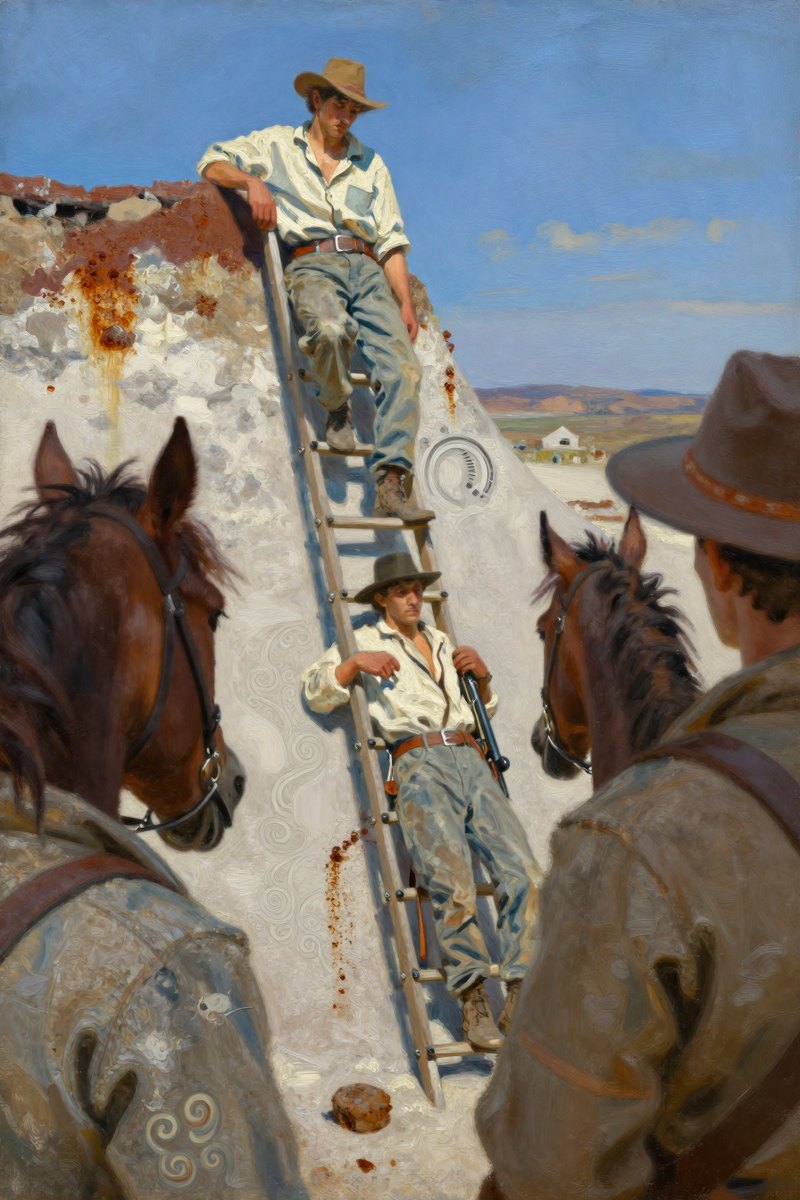
**A3.** The climax of this chapter—rescuing Jim from the swarming lions by pulling him up on the ladder—is filled with visceral, immediate danger. Unlike the psychological dread of dealing with the Professor, this is an action-packed, heroic rescue that cements the boys' loyalty to one another.
### Q4. Why might the ethical questions the story raises matter to the chapter as a whole?
**A4.** The ethical questions about shooting wild animals and rescuing the abandoned baby camel highlight the boys' innocence. Even in a harsh, deadly environment, their Missouri-bred empathy dictates their actions, contrasting their youth with the brutal reality of the desert.
### Q5. How does the story's sense of place compare to what happened in earlier chapters?
**A5.** The sense of place is radically different. St. Petersburg and the Atlantic Ocean are replaced by the vast, hostile, and exotic Sahara. The setting itself becomes an active character, throwing lions, extreme heat, and endless sand at the travelers.
## Chapter 7: CHAPTER VII.
### Q1. How does the secondary characters compare to what happened in earlier chapters?
**A1.** The "secondary characters" in this chapter are the distant desert nomads they spot from above. Unlike the active threat of the Professor, these people are treated as distant, exotic spectacles, highlighting just how disconnected and isolated the boys are in their floating bubble.
### Q2. Why might the reader's emotional response matter to the chapter as a whole?
**A2.** The reader's response shifts from high-stakes tension to sheer amusement. This change is vital because it allows Twain to showcase his signature satire through the boys' hilarious, extended debate about map colors and time zones, relieving the tension of the previous desert dangers.
### Q3. Why might a minor character's contribution matter to the chapter as a whole?
**A3.** Jim's contribution is central here. His stubborn, common-sense refusal to believe they are in Africa because "the ground isn't pink like it is on the map" serves as a brilliant critique of how book-learning (Tom's domain) compares to literal, uneducated logic.
### Q4. What questions does the author's intended audience raise for you as a reader of this chapter?
**A4.** The heavy focus on geography, map-reading, and the mechanics of time zones suggests Twain was writing for a young, curious audience. It raises the question of whether this chapter was intended to be secretly educational, wrapping a science and geography lesson inside a comedic adventure.
### Q5. Why might the central conflict matter to the chapter as a whole?
**A5.** The central conflict of the chapter is intellectual rather than physical: Tom's frustrating attempt to explain "metaphors" and "science" to Huck and Jim. This matters because it emphasizes the cultural and educational divide between the boys, showing that even in Africa, they cannot escape their Missouri identities.
## Chapter 8: CHAPTER VIII.
### Q1. What questions does a minor character's contribution raise for you as a reader of this chapter?
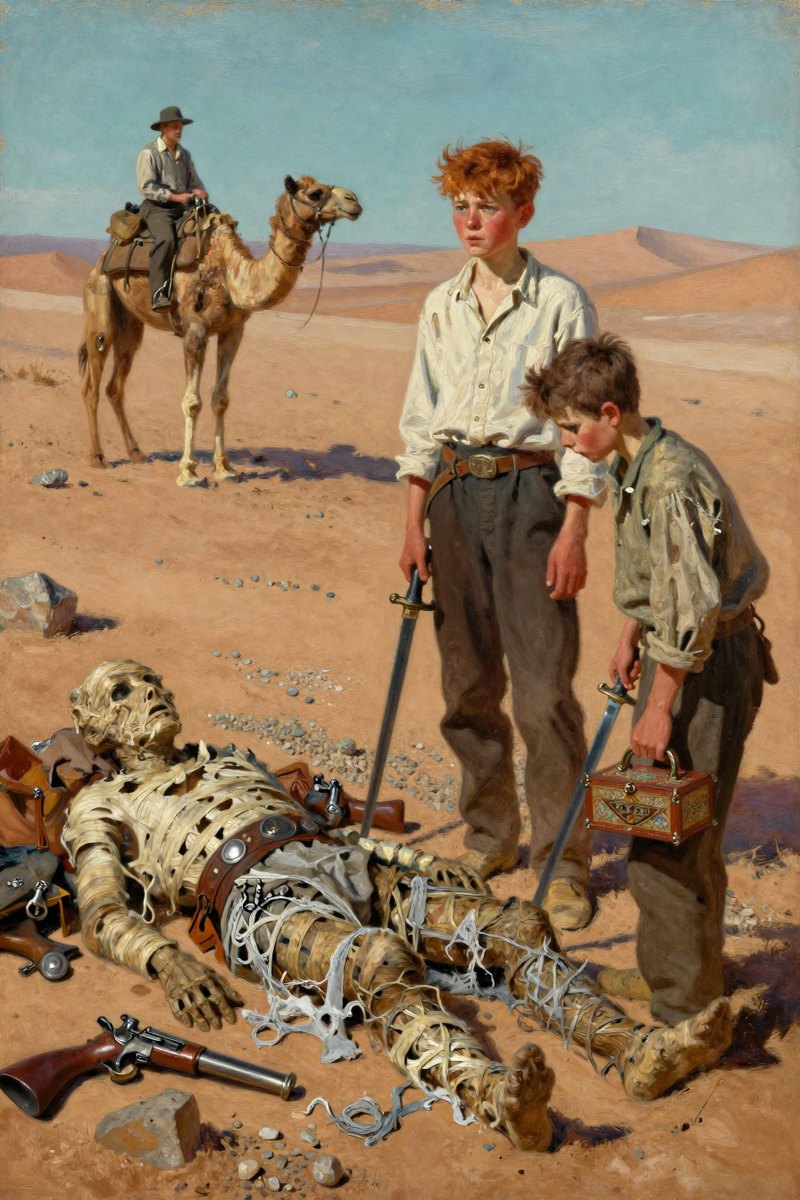
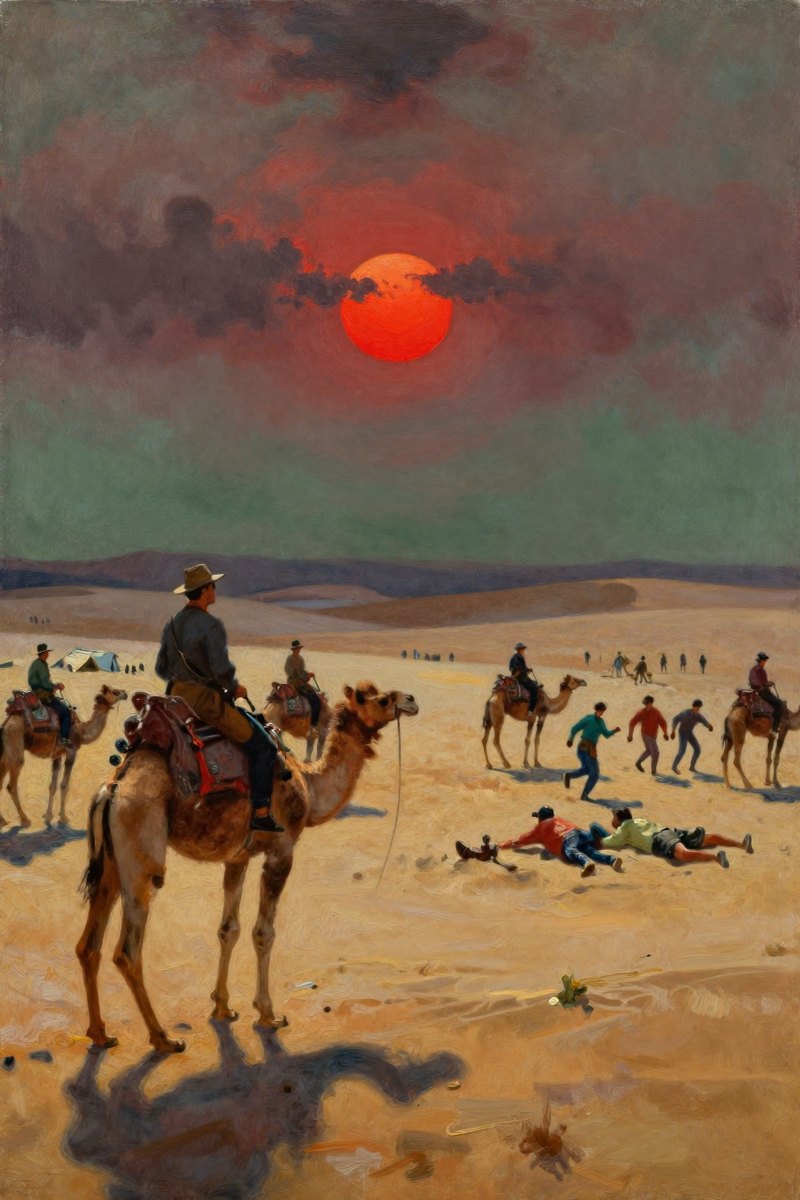
**A1.** The boys find a caravan buried in the sand, containing dead merchants and their treasures. The silent "contributions" of these deceased travelers raise grim questions: What happened to them? Will the boys suffer the same fate if they run out of water in this unforgiving desert?
### Q2. What do you notice about the passage of time in the story in "CHAPTER VIII."?
**A2.** The passage of time feels heavy and slow, marked by the shifting winds and the brutal cycle of the desert sun. This slow drag of time is suddenly shattered when they witness a violent sandstorm (a simoom) swallow the landscape, reminding them of how quickly death can arrive.
### Q3. How does the antagonist's role compare to what happened in earlier chapters?
**A3.** The "antagonist" here is no longer a person, but the desert itself. The simoom and the buried caravan represent a passive, deadly foe that kills without mercy, presenting a much more terrifying obstacle than the mad Professor ever did.
### Q4. How does a memorable scene compare to what happened in earlier chapters?
**A4.** The scene where the boys land and collect gold and jewels from the buried caravan is highly memorable. Unlike their previous treasure hunt in *Tom Sawyer*, which was exciting and adventurous, this treasure-gathering is eerie, solemn, and surrounded by death.
### Q5. Why might the moral lesson of the story matter to the chapter as a whole?
**A5.** The moral lesson revolves around greed. Despite finding vast wealth, the boys realize that gold is entirely worthless in the desert compared to a single drop of water. This stark realization humbles Tom and shifts their priorities back to basic survival.
## Chapter 9: CHAPTER IX.
### Q1. What questions does sensory or descriptive details in this chapter raise for you as a reader of this chapter?
**A1.** Twain’s beautiful descriptions of a lush oasis—complete with cool, bubbling water and green trees—contrast sharply with the harsh desert. However, when the oasis turns out to be a cruel mirage, it raises the question: Can the boys trust their own senses, or is the desert heat slowly driving them mad?
### Q2. What do you notice about the opening lines of this chapter in "CHAPTER IX."?
**A2.** The opening lines plunge the reader directly into the agonizing psychological toll of the desert journey. The initial excitement of the voyage has completely evaporated, replaced by exhaustion, thirst, and a desperate longing for home.
### Q3. How does the pivotal turning point compare to what happened in earlier chapters?
**A3.** The turning point is quiet and psychological. Instead of a physical fight or a lion attack, the boys are forced to confront their own vulnerability when they are tricked by the mirage, marking a low point in their morale.
### Q4. How does Mark Twain handle the historical context of the story here?
**A4.** Twain weaves in historical and biblical mythology through Tom’s lectures on the desert. Tom attempts to explain the historical significance of the caravan routes and the East, but his romanticized history is constantly dismantled by Huck's hilarious, practical skepticism.
### Q5. What can you say about the opening chapter in this chapter?
**A5.** The chapter opens with a heavy sense of weariness, but quickly transitions into a classic comedic debate about "murtles" (myrtles) and metaphors. This transition shows Twain's mastery of using humor to rescue his characters—and his readers—from absolute despair.
## Chapter 10: CHAPTER X.
### Q1. How does Mark Twain handle the mood of this chapter here?
**A1.** Twain shifts the mood from exhausted survival to grand, awe-inspiring adventure as the balloon reaches Egypt. The sight of the Pyramids and the Sphinx brings a sudden rush of energy and excitement back into the narrative.
### Q2. How does the secondary characters compare to what happened in earlier chapters?
**A2.** The secondary characters—a group of local Arabs climbing the Sphinx—are treated as active, comedic foils. Instead of being a distant threat, they actively try to reach the balloon, prompting Tom to use the machine's altitude controls to playfully evade them.
### Q3. How does the story's structure compare to what happened in earlier chapters?
**A3.** The structure becomes highly episodic and sight-seeking. Rather than drifting aimlessly to survive, the boys are now active tourists, with Tom steering the balloon from one famous landmark to the next like a flying tour bus.
### Q4. What can you say about the mood of this chapter in this chapter?
**A4.** The mood is playful, mischievous, and triumphantly American. Landing the balloon directly on the head of the ancient Sphinx is the ultimate act of youthful disrespect and curiosity, perfectly capturing the spirit of Tom Sawyer.
### Q5. How does Mark Twain handle the main characters here?
**A5.** Twain showcases the boys' classic dynamics in a global setting. Tom is in his element, acting as the self-appointed, bossy tour guide who knows everything, while Huck and Jim provide a grounding, unimpressed commentary on these ancient wonders of the world.
## Chapter 11: CHAPTER XI.
### Q1. How does Mark Twain handle the resolution here?
**A1.** The boys resolve their immediate need for supplies by safely navigating to Cairo and finding a way to trade and observe the city from a safe distance. Twain handles this smoothly, keeping the focus on the boys' comedic reactions to the bustling city of Cairo and the Nile.
### Q2. What do you notice about the author's use of foreshadowing in "CHAPTER XI."?
**A2.** Twain foreshadows that the boys' grand adventure is starting to run its course. As they look down at the ancient civilization of Egypt, Tom's mind begins to wander back to St. Petersburg, foreshadowing that home is calling to them.
### Q3. What do you notice about an important object or symbol in "CHAPTER XI."?
**A3.** The **Nile River** acts as a powerful symbol of life, history, and continuity. To Huck and Jim, however, it is just a very long, muddy river that reminds them of their beloved Mississippi, highlighting their deep-rooted homesickness.
### Q4. What can you say about a decision a character makes in this chapter in this chapter?
**A4.** Tom decides to tell the grand, dramatic story of the treasure of the Pyramids to impress Jim and Huck. This decision shows that despite traveling across the globe, Tom’s core nature—his love for theatrical storytelling and showmanship—has not changed at all.
### Q5. What questions does what changes by the end of this chapter raise for you as a reader of this chapter?
**A5.** By the end of the chapter, the novelty of Egypt begins to fade, replaced by a looming sense of aimlessness. It raises the question: Now that they have conquered the Atlantic, the Sahara, and the Pyramids, what is left for them to do, and how will they get back to Missouri?
## Chapter 12: CHAPTER XII.
### Q1. What can you say about any conflict resolved in this chapter in this chapter?
**A1.** The conflict of finding their next destination is resolved when Tom decides they must visit Mount Sinai and other biblical locations. This provides the drifting balloon with a new, structured purpose, driving the narrative forward.
### Q2. How does the moral lesson of the story compare to what happened in earlier chapters?
**A2.** The moral lesson in this chapter focuses on religious and historical reverence. While Tom wants to treat these biblical sites with romantic grandeur, Jim's literal-minded, deeply felt religious views challenge Tom's superficial intellectualism, creating a deeper, more respectful tone than their earlier debates.
### Q3. How does the main characters compare to what happened in earlier chapters?
**A3.** The main characters have become incredibly skilled balloonists. They handle the complex machine with ease, a far cry from the terrified children who were trapped by the Professor in Chapter 2.
### Q4. How does Mark Twain handle the main characters here?
**A4.** Twain handles them with a mix of affection and satire. He allows them to marvel at the holy lands, but keeps them grounded in their roots; they look at Mount Sinai through the lens of Sunday school lessons taught back in Missouri.
### Q5. How does Mark Twain handle the story's realism or its fantasy elements here?
**A5.** Twain balances the "fantasy" of a steering balloon with realistic geographical and historical accuracy. He describes the actual terrain of the Sinai Peninsula, making the boys' impossible scientific voyage feel remarkably grounded in the real world.
## Chapter 13: CHAPTER XIII.
### Q1. What questions does the story's realism or its fantasy elements raise for you as a reader of this chapter?
**A1.** The absolute absurdity of the ending—where Tom sends Jim all the way back across the globe in a high-tech balloon just to retrieve a clay pipe left in a pocket—stretches realism to its absolute limit. It raises the question: Is Twain mocking the entire genre of grand adventure stories by ending this epic voyage on the most trivial errand imaginable?
### Q2. What do you notice about the resolution in "CHAPTER XIII."?
**A2.** The resolution is abrupt, comedic, and domestic. The grand, transcontinental voyage is suddenly cut short because Aunt Polly discovers Jim in St. Petersburg, realizes where the boys are, and commands them to return home immediately.
### Q3. Why might the dialogue between key characters matter to the chapter as a whole?
**A3.** The final dialogue highlights that despite surviving wild beasts, madmen, sandstorms, and deserts, the boys' ultimate master is still Aunt Polly. Her simple, stern authority instantly punctures Tom’s grand illusions of being an independent global explorer.
### Q4. How does what changes by the end of this chapter compare to what happened in earlier chapters?
**A4.** The scale of the story shrinks instantly. We go from the grand heights of Mount Sinai and the vast Sahara back to the domestic sphere of Missouri. The boys are reminded that they are, after all, just children who have chores and families waiting for them.
### Q5. How does Mark Twain handle the narrative point of view here?
**A5.** Twain uses Huck's practical, unvarnished narration to deliver the final punchline. Huck doesn't find the sudden end of their historic journey tragic; he simply reports Aunt Polly’s orders and Tom’s defeat with his usual deadpan, common-sense acceptance, bringing the entire adventure to a hilariously grounded conclusion.